
Custom Paver Driveways, Patios & Walkways in Surprise
Paver design and installation for patios, driveways, and walkways in Surprise, Arizona. Travertine and interlocking concrete pavers.
Paver Installation for Surprise, Arizona Properties
Paver surfaces are the foundation of an outdoor living space. Whether you are building a backyard patio, upgrading your front walkway, creating a pool deck, or replacing a cracked concrete driveway, pavers combine beauty, durability, and function. Get inspired with our collection of paver patio ideas for Arizona backyards. At Surprise AZ Landscaping, we design and install paver surfaces throughout Surprise, Sun City West, Peoria, and the greater Phoenix west valley.
Unlike poured concrete, which develops cracks over time from Arizona’s temperature swings and soil movement, interlocking pavers are designed to flex. Each paver can move slightly as the ground shifts without cracking. If a single paver is damaged, it can be lifted out and replaced on its own, which keeps maintenance simple.
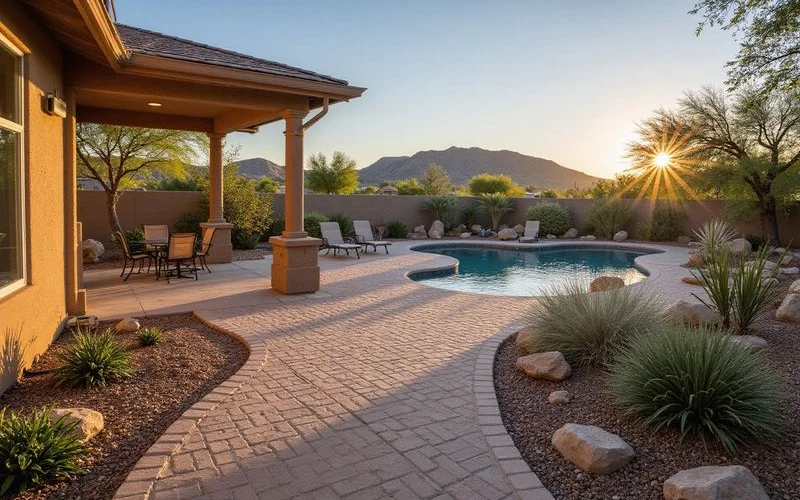
Travertine Pavers: Natural Elegance for Arizona Homes
Travertine is a popular paver material in the Surprise and Phoenix area. This natural limestone has a warm, organic beauty with color variations that complement the desert landscape, in tones from creamy ivory and warm beige to rich walnut and silver.
Travertine also has a practical advantage in Arizona: its natural porosity keeps it cooler underfoot than poured concrete or dark stone in direct sun. That makes it a popular choice for pool decks, outdoor dining areas, and any surface where bare feet are common in the warmer months.
Travertine pavers come in several finishes, including tumbled for a rustic, aged appearance and honed for a smooth, modern feel.
Interlocking Concrete Pavers
We also install interlocking concrete pavers, which come in a wider range of colors, patterns, and price points, including options that resemble natural stone, brick, and cobblestone.
Interlocking concrete pavers are manufactured to precise dimensions, so they fit together with tight, uniform joints. The interlocking shape spreads loads across many pavers at once, keeping individual pavers from settling or shifting under pressure, which makes them a good choice for driveways and high-traffic areas.
The Compacted Base
The life of a paver installation depends almost entirely on what is beneath the surface. A driveway that carries vehicles needs a deeper compacted aggregate base than a patio.
The area is excavated to the depth required, removing organic material and loose soil. A geotextile fabric is laid over the subgrade to keep fine soil from migrating up into the aggregate base, which would cause settling over time. The base is then built in layers, each compacted with a plate compactor before the next is added.
The finished base is graded with a slope for drainage, and a layer of bedding sand is spread and screeded to make the smooth, level surface the pavers are set on. Skipping this preparation is what leads to paver surfaces that develop problems early.
Edge Restraints and Thermal Expansion
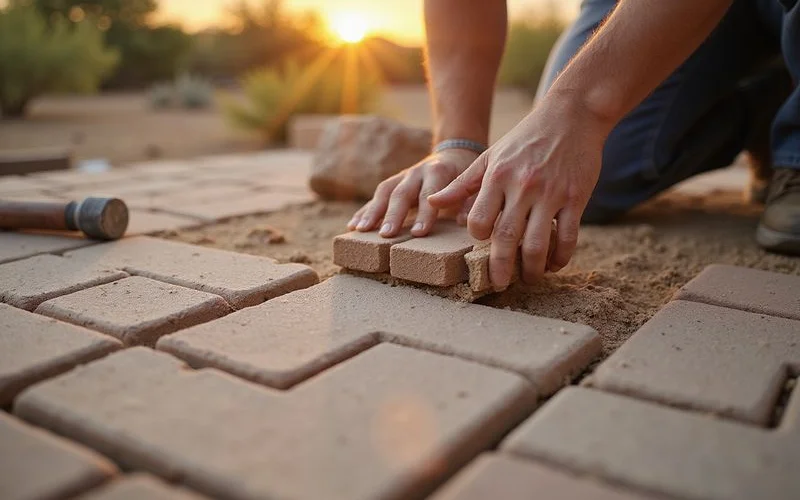
Edge restraints are an essential part of a paver installation. Without them, the outermost pavers gradually migrate outward, opening joints and weakening the interlock. Rigid plastic or aluminum edge restraints, spiked into the compacted base, are hidden after installation and hold every paver in position.
In Arizona, thermal expansion matters. Paver surfaces get very hot on summer afternoons and cool on winter mornings, and that range causes expansion and contraction in both the pavers and the base. Proper joint widths, flexible polymeric sand that moves with the pavers, and well-placed edge restraints allow that movement without buckling.
Polymeric Sand: The Joint That Holds Everything Together
After the pavers are laid and compacted into the bedding sand, the joints between them are filled with polymeric sand. Polymeric sand contains polymer binders that activate when misted with water, hardening into a flexible material that locks the pavers in place, resists weed germination, and resists erosion from rain and irrigation water.
The sand is swept across the surface and worked into every joint. Once activated, it cures firm but slightly flexible, letting the pavers move with thermal expansion while keeping the joint lines stable.
Without polymeric sand, paver joints fill with blowing dirt and sand, creating the perfect environment for weed growth. Ants and other insects colonize the gaps between pavers, undermining the bedding layer. Water washes standard sand out of the joints, loosening the interlock. Polymeric sand resists all of these problems.
Paver Patterns and Design Options
The pattern pavers are laid in affects both how the surface looks and how it holds together. Common patterns include herringbone, the strongest interlocking pattern and well suited to driveways; running bond, which gives a clean, modern look for walkways and patios; and basket weave, which gives a classic, traditional appearance.
Travertine is often laid in the French pattern, also known as Versailles, which combines four paver sizes in a repeating random arrangement. The pattern shows off travertine’s natural color variation and gives an Old World look that pairs well with Arizona’s desert architecture.
The pattern, color, and border treatment are chosen to suit your home’s architecture and landscape design.
Ready to transform your outdoor space?
Request a Paver Installation EstimateOr call us at (623) 292-2472
Paver Maintenance in the Arizona Climate
Paver surfaces need little maintenance. Topping up polymeric sand in high-traffic areas, occasional pressure washing to remove dust and staining, and replacing any damaged pavers promptly keep them looking good. Travertine benefits from periodic sealing to protect against staining.
What's Included in Our Pavers Service
Worth Knowing About Pavers
A Base Built for the Load
A compacted base built in layers prevents the settling, heaving, and uneven surfaces that come from an inadequate foundation.
How Our Pavers Process Works
Design Consultation & Layout
The area is measured, and paver styles, colors, patterns, borders, and transitions are chosen.
Excavation & Base Preparation
The area is excavated, geotextile fabric is laid, and an aggregate base is built and compacted in layers with a plate compactor.
Paver Installation & Edge Restraints
Pavers are laid in the chosen pattern, border pieces are cut to fit, and edge restraints are secured to stop outward migration.
Polymeric Sand & Final Compaction
Polymeric sand is swept into the joints and activated with water, and a final compaction seats the pavers into the bedding sand.
Planning a Pavers Project?
Tell us about it, and we'll be in touch.
Pavers Projects in Surprise, AZ
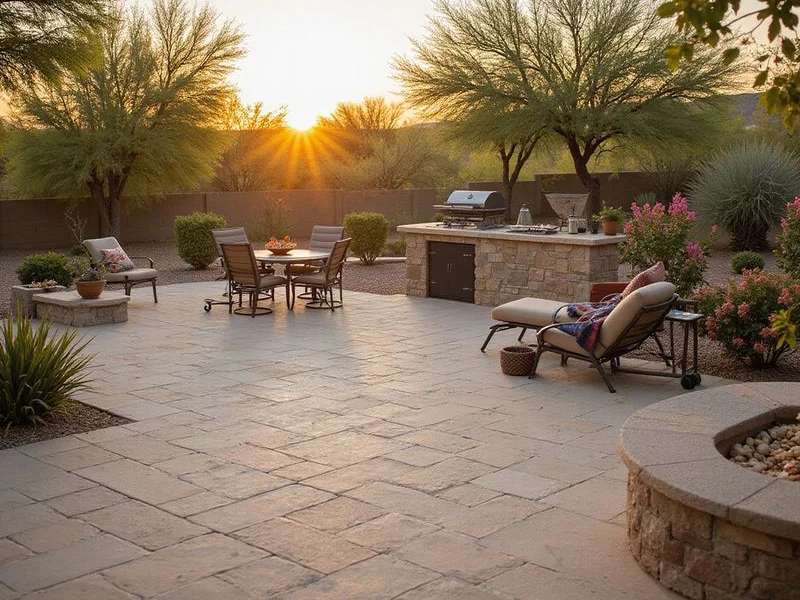
Travertine paver patio with herringbone pattern and a fire pit area
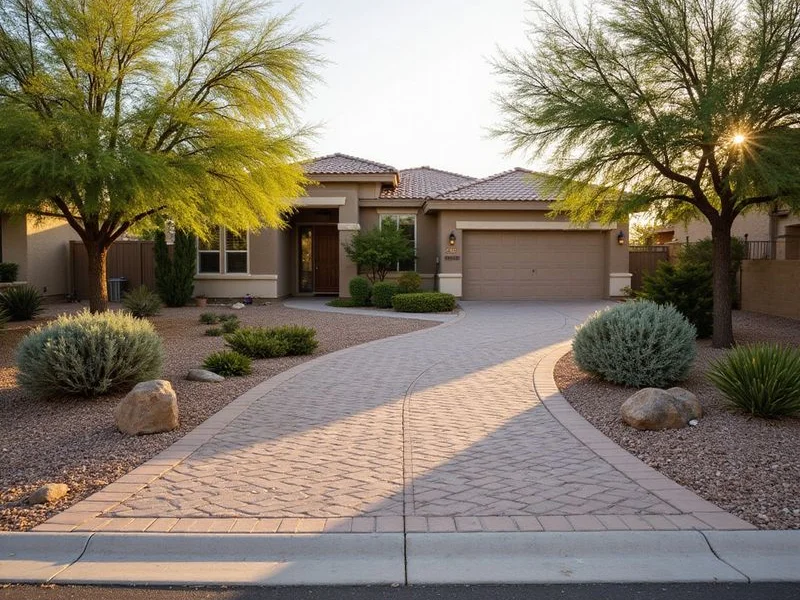
An interlocking paver driveway
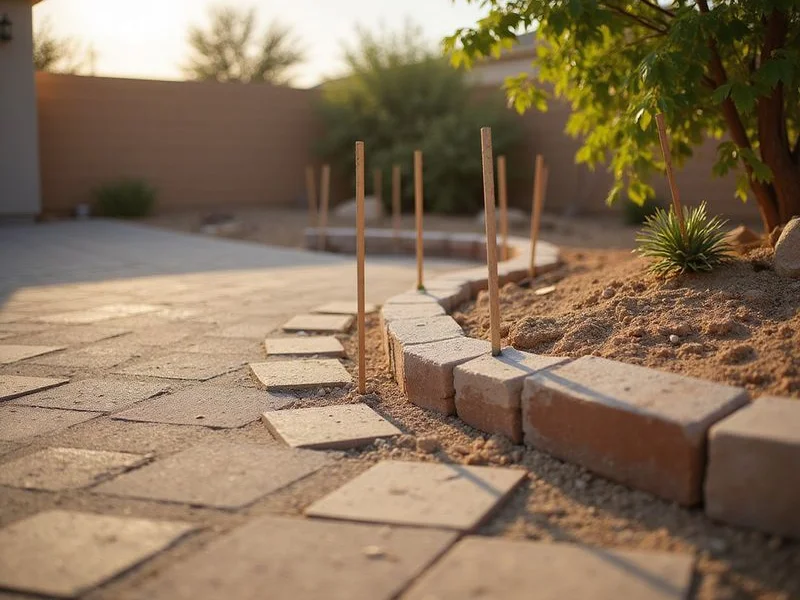
A compacted base and edge restraints keep the surface level
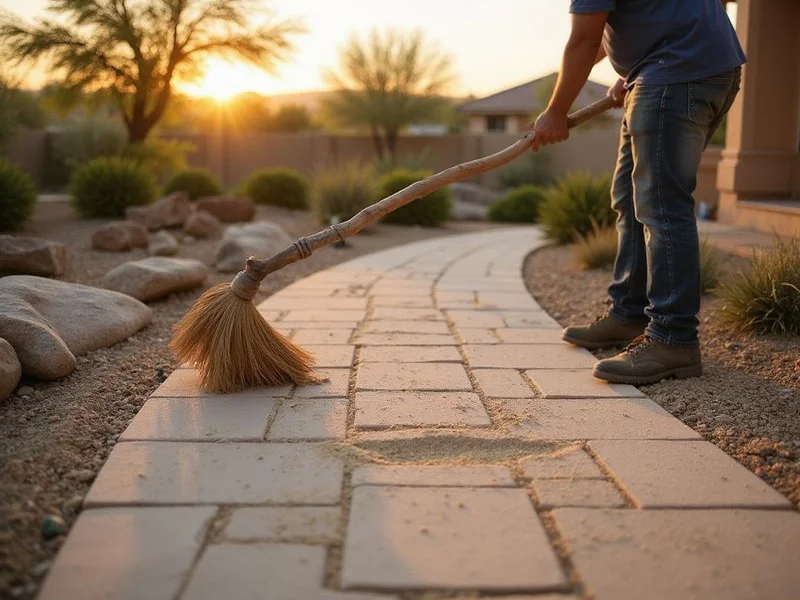
Polymeric sand locks pavers in place and resists weed growth between joints
Pavers Questions Answered
What is the difference between travertine pavers and concrete pavers?
How long do paver installations last in the Arizona climate?
Will pavers get too hot to walk on barefoot in the Arizona summer?
What is polymeric sand and why is it important?
Can you install pavers over an existing concrete patio?
Request a Pavers Estimate
Tell us about your property and what you have in mind, or give us a call.