
Landscape Lighting for Arizona Evenings
Landscape lighting design and installation using low-voltage LED fixtures for Surprise, Arizona homes and outdoor living spaces.
Transform Your Landscape After Dark
Your landscape does not have to disappear when the sun goes down. Some of the most striking landscape moments happen after dark, when lighting brings out textures, shapes, and shadows that go unnoticed during the day. At Surprise AZ Landscaping, we design and install landscape lighting that extends the beauty and usability of your outdoor spaces into the evening, adding safety, security, and visual impact.
Arizona’s clear desert skies and mild evening temperatures make outdoor spaces inviting at night. Whether you are hosting a dinner party on your patio, relaxing by the pool, or pulling into your driveway after a long day, landscape lighting makes the evening more beautiful and more comfortable.
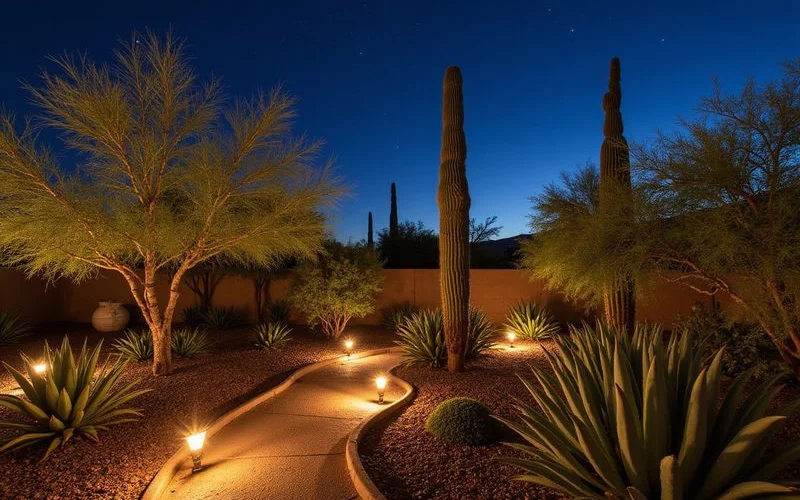
Low-Voltage LED Technology for Efficiency and Safety
Our landscape lighting systems use low-voltage LED technology. Running at low voltage through a step-down transformer, these systems are inherently safer to work around: a wire accidentally cut while gardening is not a shock hazard the way a household circuit is.
LED fixtures use far less energy than halogen equivalents for similar brightness, and last much longer, avoiding the frequent bulb replacements halogen systems need.
Warm white color temperatures give a natural, inviting glow that complements the warm tones of Arizona’s desert landscape. Cool white or blue-toned lighting tends to look artificial in residential outdoor settings.
Uplighting: Showcasing Trees and Architecture
Uplighting is the most dramatic landscape lighting technique, and it is particularly effective in Arizona’s desert landscapes. Fixtures positioned at the base of trees, saguaro cacti, boulders, and architectural columns project light upward to illuminate these features against the night sky, highlighting the sculptural quality of desert vegetation and creating depth throughout your landscape.
For native trees like palo verde and desert willow, uplighting reveals the branch structure and bark texture that are easy to overlook during the day. Large boulders take on a warm glow that anchors a landscape design. Architectural features like stone columns, water features, and garden walls gain dimension and presence when lit from below.
The angle and distance of an uplight decide the effect. A fixture placed too close creates harsh, unflattering light, while one placed too far produces a diffuse wash that lacks definition. Testing positions after dark shows what works before fixtures are set in place.
Path Lights for Safety and Elegance
Beyond aesthetics, landscape lighting serves an essential safety function. Path lights along walkways, steps, driveways, and transitions between surfaces help prevent trips and falls by clearly defining edges and grade changes. In Surprise, where many landscapes feature decomposed granite pathways, natural stone steps, and transitions between paver patios and turf, path lighting matters for getting around safely after dark.
Path lights are positioned at regular intervals along one or both sides of a walkway, with fixture heights and spacing chosen for the pathway and its surroundings, giving even coverage without glare or hot spots. Bollard-style path lights suit wide pathways, while smaller hat-style fixtures suit garden paths and narrow walkways.
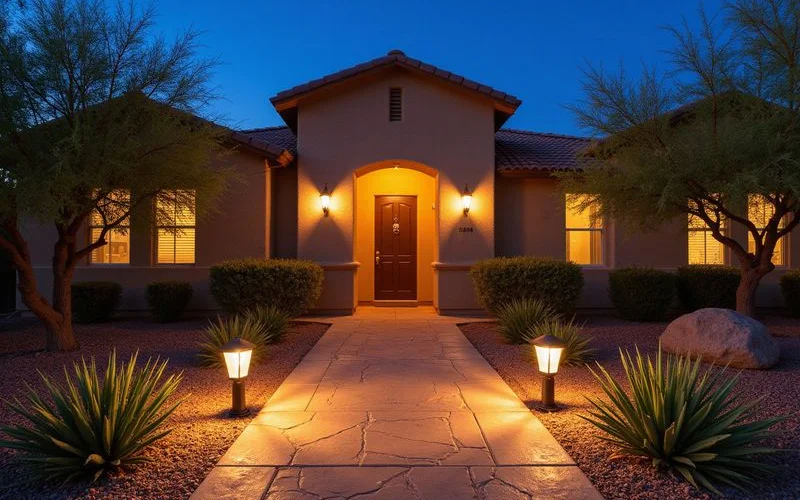
Moonlighting: The Most Natural Lighting Effect
Moonlighting suits properties with mature trees. Compact LED fixtures mounted high in the canopy of a large tree aim light downward through the branches and leaves, casting a soft, dappled pattern of light and shadow on the ground below that closely mimics natural moonlight filtering through a tree.
Moonlighting is particularly effective over outdoor dining areas, patios, and seating areas where you want ambient illumination without the harsh directness of overhead fixtures. The gentle, shifting shadows add movement and life to the space. Combined with uplighting elsewhere in the landscape, moonlighting produces a balanced, layered lighting design.
Transformer Sizing
The transformer is the heart of a low-voltage lighting system, converting household power to the low voltage that powers the fixtures. Sizing it correctly is one of the most important decisions in a landscape lighting installation.
An undersized transformer causes dim, underperforming fixtures; an oversized one wastes energy and money. The transformer is matched to the total wattage of the fixtures, with room for future expansion, and larger properties may use more than one transformer to limit voltage drop across long wire runs.
Multi-tap transformers allow the voltage output to be adjusted for wire length, so fixtures at the end of a long run get a boosted tap to make up for voltage lost in the wire. This keeps brightness even across the system.
Photocell Sensors and Automatic Operation
A photocell sensor turns a lighting system on at dusk and off at a programmed time. There is no switch to flip, no timer to adjust seasonally, and no chance of forgetting to turn the lights on for evening guests. Because the photocell responds to ambient light, the system comes on at the right time year-round as sunset shifts through the seasons.
For more control, smart transformers with Wi-Fi connectivity and smartphone app control let you create lighting zones, dim specific areas, set schedules, and control your lights remotely.
Ready to transform your outdoor space?
Request a Landscape Lighting EstimateOr call us at (623) 292-2472
Landscape Lighting for Security
A well-lit property is less inviting to trespassers. Lighting around entry points, side yards, gates, and dark corners removes the shadows that provide cover for unwanted activity. Unlike harsh security floodlights, landscape lighting can provide that illumination while looking attractive and welcoming, protecting your property while adding to its curb appeal every night.
What's Included in Our Lighting Service
Worth Knowing About Lighting
Low-Voltage LED Technology
LED fixtures use less energy than halogen alternatives and need bulb replacements far less often. Low-voltage systems are safe to work around.
How Our Lighting Process Works
Design Consultation
Existing light conditions are assessed, key focal points identified, and your goals for beauty, safety, and security discussed.
Lighting Plan & Fixture Selection
A lighting layout shows fixture placement, wire runs, and transformer location, and the transformer is sized to the fixtures.
Installation & Wiring
Fixtures are installed, direct-burial landscape wire is run, and the transformer is connected with a photocell sensor, using waterproof connectors.
Aiming, Testing & Programming
At dusk, fixtures are aimed, brightness is checked, and the photocell sensor and timer are set for automatic operation.
Planning a Lighting Project?
Tell us about it, and we'll be in touch.
Lighting Projects in Surprise, AZ
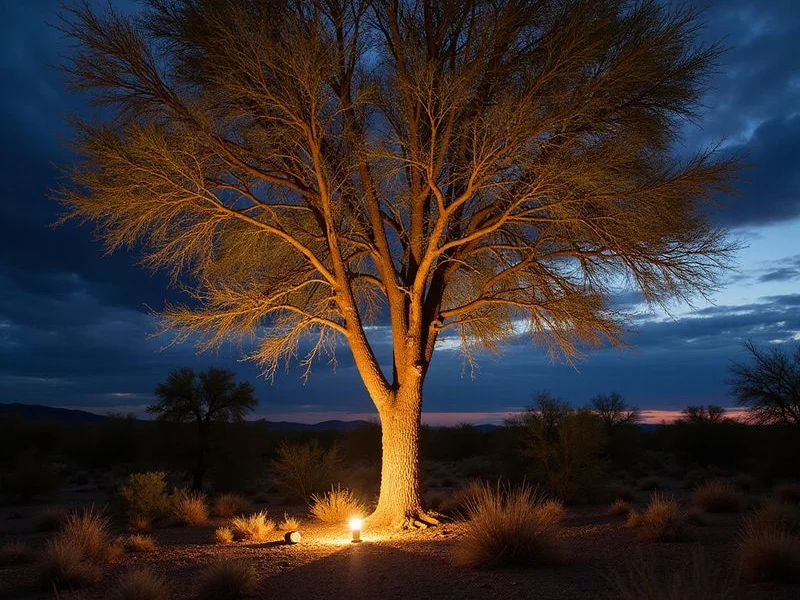
Uplighting creates dramatic silhouette effects on native desert trees
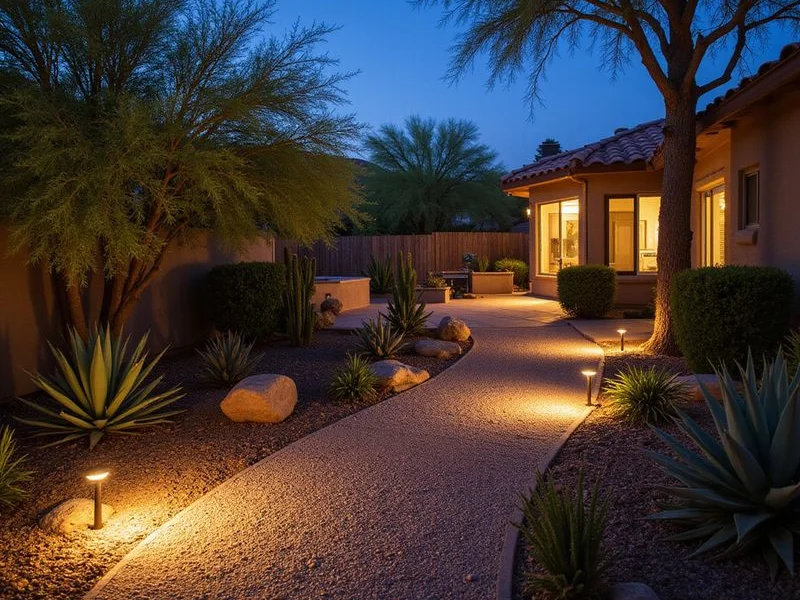
Path lights guide guests safely along walkways
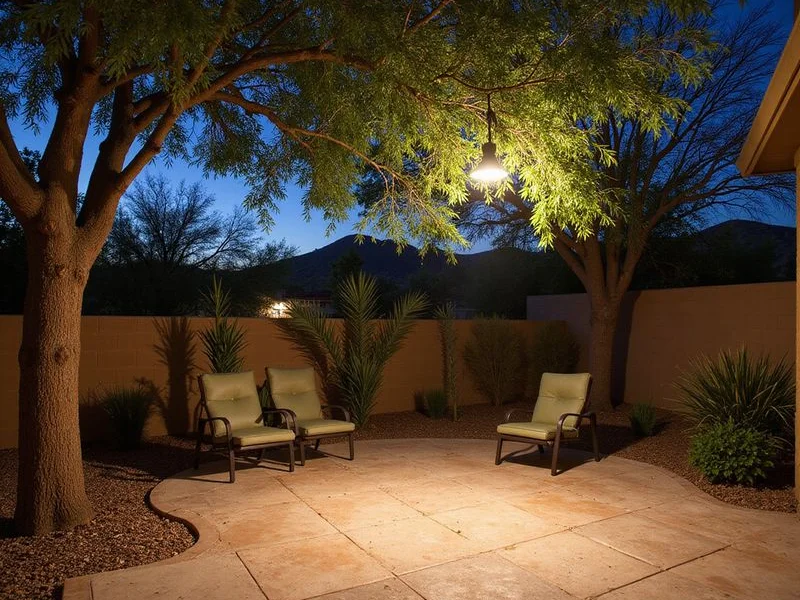
Moonlighting creates natural shadow-sm patterns that mimic soft moonlight
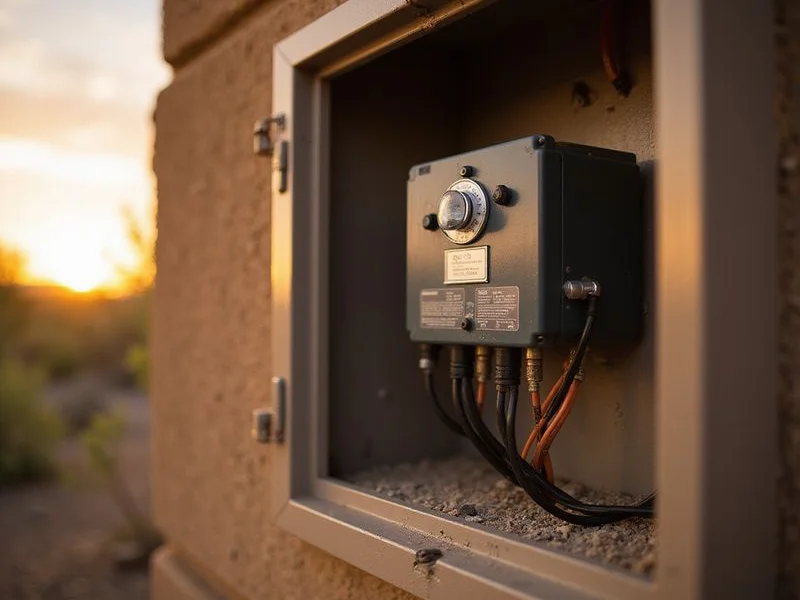
The transformer powers every fixture on the system
Lighting Questions Answered
How much does landscape lighting cost in Surprise, Arizona?
Do LED landscape lights work well in Arizona heat?
What is the moonlighting technique?
Will landscape lighting increase my electric bill significantly?
How are landscape lighting fixtures maintained?
Complementary Landscape Services

Landscape Design & Installation
Custom landscape design and installation for the Surprise, Arizona climate, from site assessment to desert-adapted plantings.
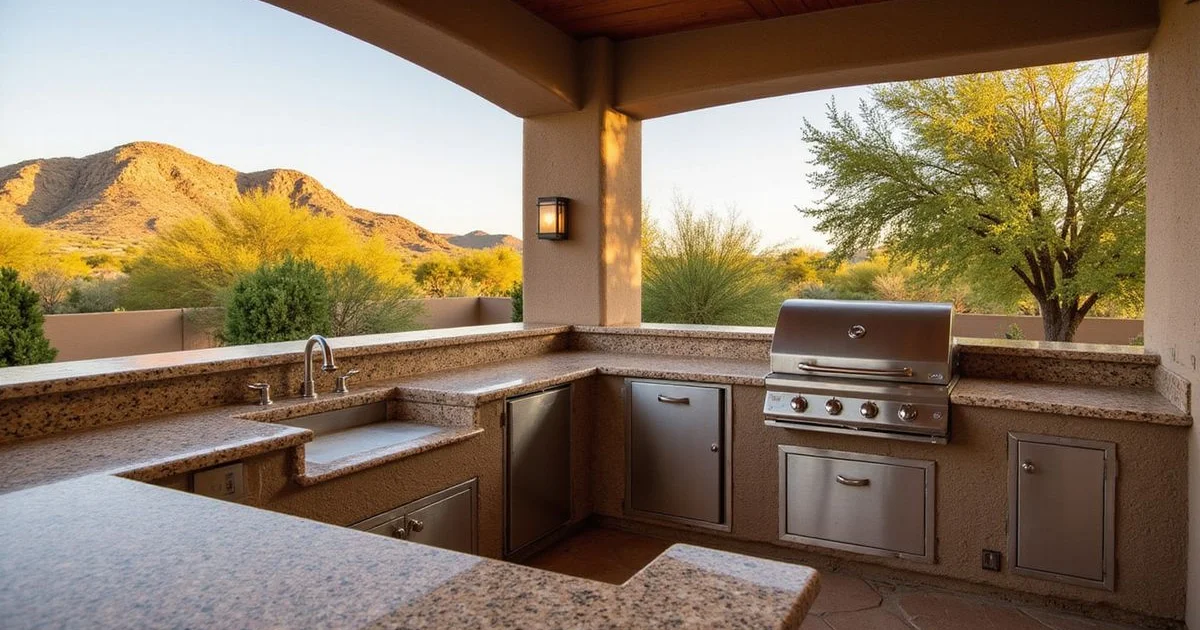
Outdoor Kitchen Design & Installation
Custom outdoor kitchen design and installation for Surprise, Arizona homes. Granite countertops, stainless steel appliances, and shade structures.
Request a Lighting Estimate
Tell us about your property and what you have in mind, or give us a call.